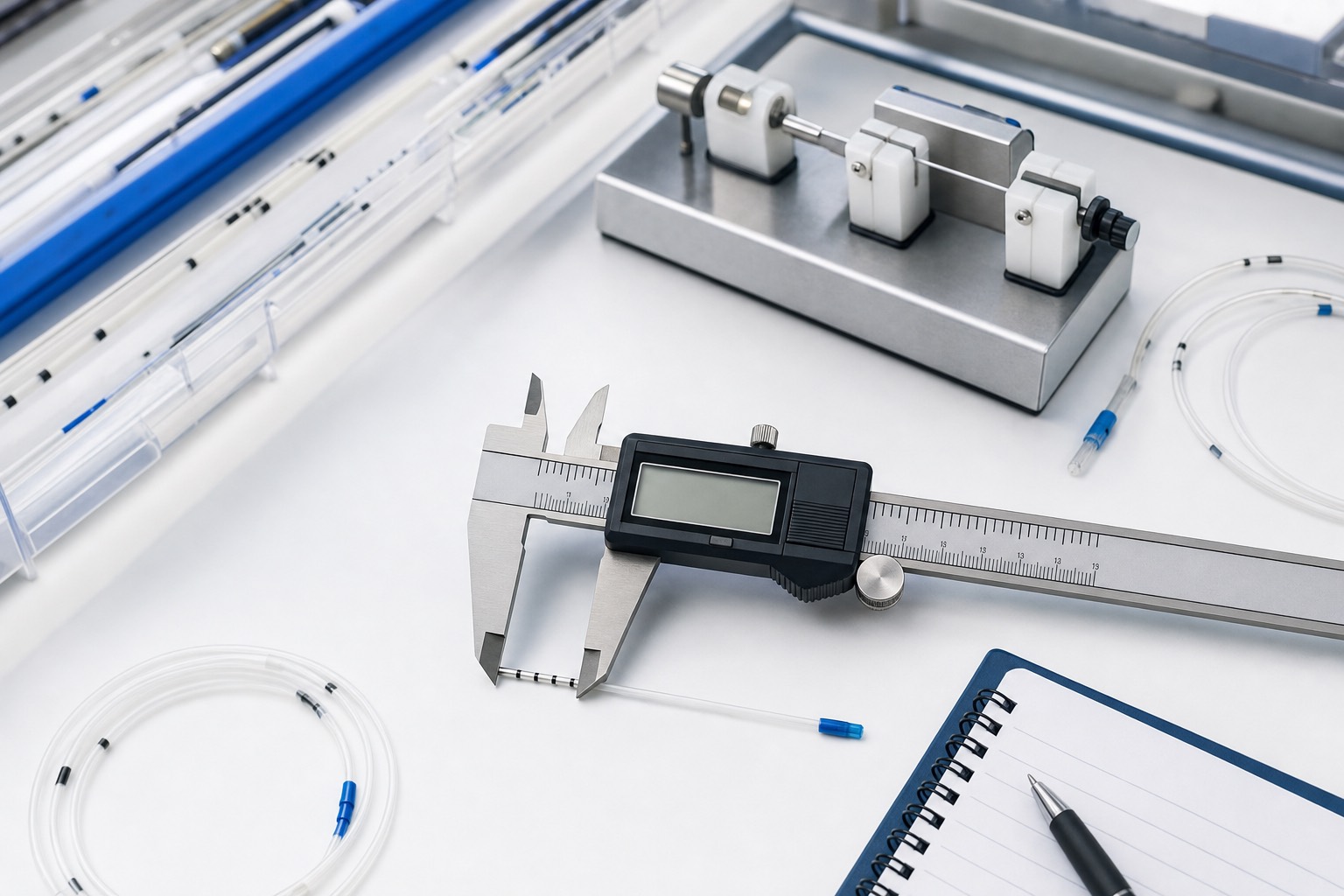
Freeze the design basis
Confirm approved drawings, specifications, material grades, suppliers, interfaces and the rationale behind critical dimensions.
Define equipment and tooling
Identify fixtures, mandrels, ovens, bonders, inspection equipment, calibration, maintenance and tooling-life requirements.
Document the process window
Record critical parameters, ranges, sequence, environmental needs, in-process checks and reaction plans for nonconformance.
Confirm measurement capability
Ensure gauges and test methods have suitable resolution, repeatability and reproducibility for the tolerance or acceptance limit.
Build traceability and training
Connect lots, operators, equipment and results. Training should cover both the work instruction and the failure modes it is designed to prevent.
A useful next step
Share a non-confidential summary of the application, development stage, current architecture and most important uncertainty. From there, the appropriate review, analysis or training scope can be identified.
This content is educational and is not medical advice or a substitute for applicable quality and regulatory requirements.